What We Do for Continuous Monitoring
Updated on October 25, 2022, by Xcitium
What We Do for Continuous Monitoring: Protects infrastructure with real-time threat intelligence monitoring
Continuous security monitoring is the ongoing process of monitoring endpoints, networks, cloud environments, and user activity in real time to detect cyber threats, suspicious behavior, vulnerabilities, and unauthorized access attempts. Modern continuous monitoring solutions use AI, behavioral analytics, and endpoint detection and response (EDR) technologies to identify and stop threats before they disrupt business operations.
Xcitium cWatch is a comprehensive continuous monitoring solution for internal and cloud network security that is tuned to detect threats before they can affect your servers, databases or critical infrastructure. cWatch provides continuous monitoring and reporting of network, system, user activity and data access in combination with extensive analysis and correlation capabilities. The Xcitium breach and threat detection system follows a process to gather all data, including sources from the endpoint client network, and analyzes them against indicators of compromise (IOCs), using both data analysis and human analysis techniques.
How Continuous Monitoring Works
Continuous monitoring platforms collect and analyze security data across endpoints, servers, networks, cloud environments, and applications.
The process typically includes:
- Collecting real-time security telemetry
- Monitoring endpoint and network behavior
- Detecting suspicious activity using AI and behavioral analytics
- Correlating security events across systems
- Prioritizing high-risk threats
- Automatically containing malicious activity
- Supporting incident investigation and response
Modern continuous monitoring helps organizations identify cyber threats faster and reduce attacker dwell time.
What We Monitor Continuously
Continuous monitoring solutions help organizations monitor:
- Endpoint activity
- Network traffic
- Cloud workloads
- User behavior
- Remote devices
- Server activity
- Authentication events
- Application behavior
- Malware indicators
- Suspicious outbound connections
Continuous visibility helps security teams identify abnormal activity before attackers compromise sensitive systems.
Threats Detected Through Continuous Monitoring
Advanced continuous monitoring solutions can detect:
- Ransomware attacks
- Fileless malware
- Zero-day threats
- Credential theft
- Insider threats
- Phishing attacks
- Unauthorized access attempts
- Remote access trojans (RATs)
- Data exfiltration attempts
- Lateral movement across networks
Behavioral monitoring allows organizations to identify sophisticated attacks that traditional antivirus software may miss.
Traditional Security Monitoring vs Continuous Monitoring
| Feature | Traditional Monitoring | Continuous Monitoring |
|---|---|---|
| Monitoring Frequency | Periodic | Real-time |
| Threat Detection Speed | Slower | Immediate |
| Behavioral Analysis | Limited | Advanced |
| Endpoint Visibility | Partial | Comprehensive |
| Automated Response | Minimal | Advanced |
| Fileless Malware Detection | Weak | Strong |
| Cloud Monitoring | Limited | Continuous |
| Threat Correlation | Basic | AI-Driven |
Competitor pages repeatedly emphasize continuous visibility and faster incident response.
What We Do for Continuous Monitoring: Xcitium Breach And Threat Detection Process
Simply by gathering logs from Advanced Endpoint Protection provides enterprises with extensive visibility over endpoints, files executed or in transit, the files’ verdicts and relevant interactions. 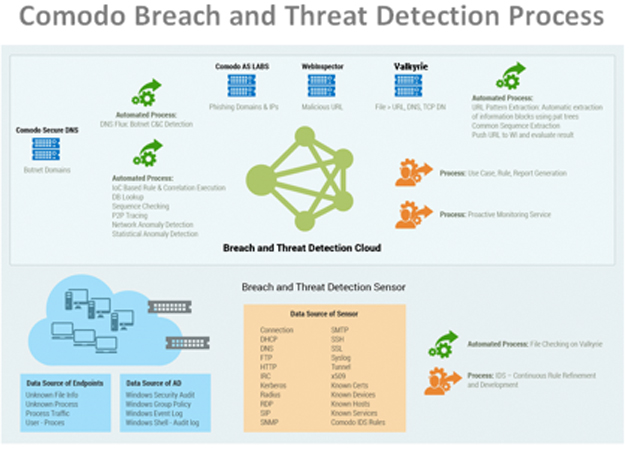
What We Do for Continuous Monitoring: ENDPOINT DATA IS ANALYZED AGAINST INDICATORS OF COMPROMISE
- Unusual Inbound/Outbound Network Traffic
- User Account Activity Anomalies
- Geographical Anomalies
- Authentication Anomalies
- Anomalies Specific to Backend Applications
- Web Traffic Anomalies
- Detection of Autonomous System Behavior
- Malware File Checking
- Port-Application Traffic Anomalies
- Suspicious Registry Or System File Changes
- DNS Request Anomalies
- Mobile User Profile Anomalies
- Signs Of DDoS Activity
- Long-Term Trending
CONTINUOUS MONITORING OF INTERNAL AND CLOUD NETWORK SECURITY
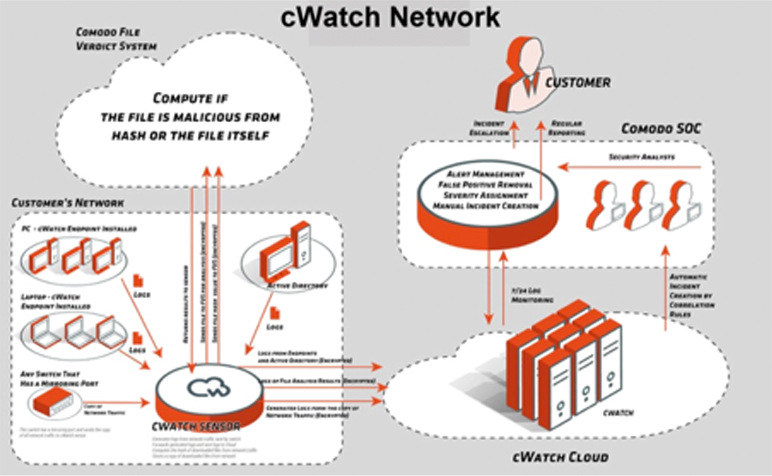
The Xcitium Security Operation Center (CSOC) provides breach prevention and threat detection delivered as a managed service (SaaS). As part of the managed service delivery, the CSOC is responsible for the monitoring and assessment of any advanced threats that target enterprise network assets and cloud-deployed applications along with accompanying underlying cloud infrastructure. With the extensive threat intelligence about emerging malware and threats from the Xcitium Global Threat Cloud, the CSOC provides an early warning and assessment of any malicious activity that target either of these environments. All of the services are managed by CSOC Centers in the US and EMEA.
NETWORK PLATFORM COMPONENTS:
- Endpoint Agent distributed via active directory (AD)
- AD Monitoring Agent
- Network Sensor
- Cloud Application and Big Data Platform
- Xcitium Threat Cloud: Domains, Valkyrie, and Phishing
REAL-TIME THREAT INTELLIGENCE MONITORS:
- Malware (File)
- Insider threat (Users)
- Outside attacker (IP)
- Phishing domains (domain and email)
- Bot clients
COMPLETE NETWORK VISIBILITY
functions into one platform including network monitoring, application detection, full packet capture, intrusion detection, packet processing and protocol inspection. Real-time threat intelligence monitoring provides critical data on applications and infrastructure without affecting Network Performance. cWatch Network Sensor generates logs and information that are then normalized, classified and correlated by Xcitium SOC experts. Timely and meaningful alerts and reports are generated automatically without the arduous process of defining custom rules and queries resulting in: 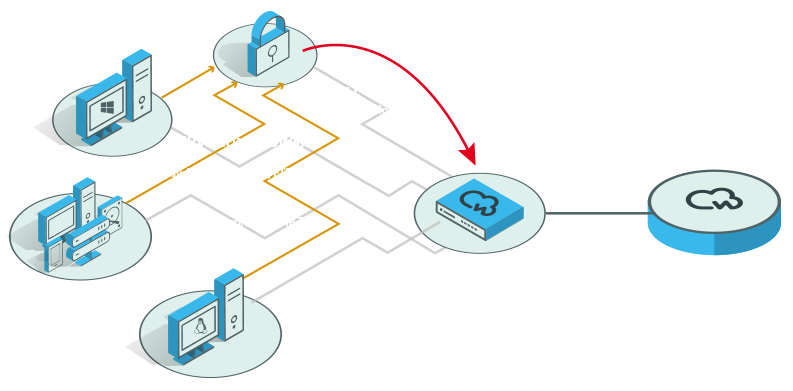
- Protection from the OWASP Top Ten list of vulnerabilities
- Immediate compliance to PCI DSS 6.6 without an application source code review or vulnerability assessment
- Visibility into the web server or application but also to any middleware applications, database access, configuration changes, server authentication, security logs, anomaly detection, incident response and alerting, as well as immediate protection from emerging threats by developing handcrafted security policies and signatures for your web site and applications.
- Prevention of infection and the damage from unknown (zero-day) threats.
Why Behavioral Analytics Matters in Continuous Monitoring
Traditional cybersecurity tools often rely heavily on known malware signatures. Modern cyberattacks increasingly use:
- Fileless malware
- Living-off-the-land attacks
- Polymorphic malware
- Zero-day exploits
Behavioral analytics identifies suspicious activity patterns instead of relying only on known malware signatures. This allows continuous monitoring platforms to detect advanced threats earlier in the attack lifecycle.
24/7 Real-Time Threat Monitoring
Cyberattacks can occur at any time, including outside business hours.
Continuous monitoring provides:
- Real-time threat visibility
- Faster incident detection
- Reduced attacker dwell time
- Automated threat containment
- Continuous endpoint protection
- Faster incident response
Organizations with remote employees and hybrid work environments especially benefit from always-on monitoring capabilities.
The Continuous Monitoring Lifecycle
Modern continuous monitoring follows a continuous cybersecurity process:
Detect
Monitor systems continuously for suspicious activity.
Analyze
Use AI and threat intelligence to identify malicious behavior.
Prioritize
Identify high-risk threats based on severity and business impact.
Contain
Automatically isolate compromised endpoints or accounts.
Respond
Investigate and remediate security incidents quickly.
Improve
Continuously strengthen security posture based on threat intelligence.
Benefits of Continuous Monitoring for Businesses
Continuous monitoring helps organizations:
- Reduce cybersecurity risks
- Detect attacks earlier
- Protect sensitive customer data
- Improve compliance readiness
- Secure remote workforces
- Minimize downtime
- Improve incident response
- Reduce ransomware exposure
Industries such as healthcare, finance, retail, manufacturing, and government increasingly rely on continuous monitoring to improve cybersecurity resilience.
Continuous Monitoring and Compliance
Continuous monitoring helps organizations maintain compliance with cybersecurity regulations and standards such as:
- HIPAA
- PCI DSS
- GDPR
- SOC 2
- ISO 27001
- NIST
Real-time monitoring provides continuous visibility into security posture and helps identify compliance gaps before audits occur.
Continuous Monitoring With EDR and XDR
Continuous monitoring platforms integrate with:
- Endpoint Detection and Response (EDR)
- Extended Detection and Response (XDR)
- SIEM platforms
- Threat intelligence feeds
- Cloud security platforms
Combining continuous monitoring with EDR and XDR improves visibility across endpoints, networks, cloud environments, and user activity.
Continuous Monitoring and Zero Trust Security
Zero Trust security assumes no device or user should be trusted automatically.
Continuous monitoring supports Zero Trust by:
- Continuously verifying endpoint behavior
- Monitoring user activity
- Detecting unauthorized access attempts
- Restricting lateral movement
- Improving identity security
Combining Zero Trust with continuous monitoring creates stronger protection against modern cyber threats.
Why Modern Businesses Need Continuous Monitoring
Cybercriminals increasingly use sophisticated attack techniques designed to bypass traditional security tools.
Modern attacks use:
- AI-powered phishing
- Fileless malware
- Supply chain attacks
- Living-off-the-land techniques
- Advanced ransomware
Advanced continuous monitoring solutions use behavioral AI, automated containment, and real-time analytics to identify and stop threats before they spread across business environments.
Frequently Asked Questions About Continuous Monitoring
What is continuous monitoring in cybersecurity?
Continuous monitoring is the real-time observation of systems, endpoints, networks, and cloud environments to detect cyber threats, vulnerabilities, and suspicious activity continuously.
Why is continuous monitoring important?
Continuous monitoring helps organizations detect cyberattacks faster, reduce attacker dwell time, improve compliance, and strengthen overall cybersecurity posture.
What threats can continuous monitoring detect?
Continuous monitoring can detect ransomware, malware, insider threats, credential theft, phishing attacks, fileless malware, and unauthorized access attempts.
How does continuous monitoring improve incident response?
Continuous monitoring provides real-time visibility into threats, allowing security teams to investigate and contain attacks faster.
What is the difference between continuous monitoring and traditional monitoring?
Traditional monitoring often relies on periodic reviews, while continuous monitoring provides ongoing real-time threat detection and security visibility.

 Loading...